
Join University of California San Diego’s “Learning How to Learn: Powerful mental tools to help you master tough subjects”, starting August 1st.
Over 100,000 learners have already joined Barbara Oakley and Terrence Sejnowski new course, “Learning How to Learn: Powerful mental tools to help you master tough subjects”–which is not surprising, considering we are Courseraians, after all! The aim for the course is to teach people how to learn more effectively, in any type of study or topic. In the course, Professor Sejnowski, the Francis Crick Professor at the Salk Institute as well as a Professor at UCSD, provides up-to-the-minute perspectives from neuroscience related to learning. Professor Oakley provides far-reaching and practical insight not only from neuroscience and cognitive psychology, but from decades of practical experience teaching tough university-level courses. She notes that in this course, learners will “peep under the mental hood” and understand the way in which people process, assimilate, and ultimately learn information and gain new knowledge.
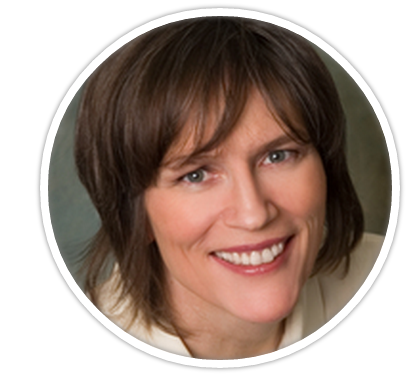
Professor Oakley’s commitment to mastering effective learning comes from her own struggles with academics. In a recent interview with Popular Science radio, Professor Oakley explained how during middle and high school, she failed math, and therefore invested her time in learning languages. Ultimately, after a stint in the US Army as a Signal Officer, she decided to take on engineering as a second bachelor’s degree to learn more about the systems she with which working with.
Her most recent book, “A Mind for Numbers: How to Excel in Math and Science, Even if You Flunked Algebra”, draws on her own experiences in learning challenging topics. To eventually obtain her Ph.D. in Systems Engineering, she had to overcome her earlier experiences with failing math, and forced herself to develop a framework in which to succeed. Her book and the course include advice and techniques on how to study well, and–as importantly–how to avoid bad, detrimental study habits.
Below are Professor Oakley’s “10 Rules of Bad Studying”, adapted from the book. We hope apply them to your studies on Coursera!
Ten Rules of Bad Studying
Excerpted from “A Mind for Numbers: How to Excel in Math and Science, Even if You Flunked Algebra, by Barbara Oakley. Penguin, July 2014.
Avoid these techniques—they can waste your time even while they fool you into thinking you’re learning!
- Passive rereading. Sitting passively and running your eyes back over a page. Unless you can prove that the material is moving into your brain by recalling the main ideas without looking at the page, rereading is a waste of time.
- Letting highlights overwhelm you. Highlighting your text can fool your mind into thinking you are putting something in your brain, when all you’re really doing is moving your hand. A little highlighting here and there is okay—sometimes it can be helpful in flagging important points. But if you are using highlighting as a memory tool, make sure that what you mark is also going into your brain.
- Merely glancing at a problem’s solution and thinking you know how to do it. This is one of the worst errors students make while studying. You need to be able to solve a problem step-by-step, without looking at the solution.
- Waiting until the last minute to study. Would you cram at the last minute if you were practicing for a track meet? Your brain is like a muscle—it can handle only a limited amount of exercise on one subject at a time.
- Repeatedly solving problems of the same type that you already know how to solve. If you just sit around solving similar problems during your practice, you’re not actually preparing for a test—it’s like preparing for a big basketball game by just practicing your dribbling.
- Letting study sessions with friends turn into chat sessions. Checking your problem solving with friends, and quizzing one another on what you know, can make learning more enjoyable, expose flaws in your thinking, and deepen your learning. But if your joint study sessions turn to fun before the work is done, you’re wasting your time and should find another study group.
- Neglecting to read the textbook before you start working problems. Would you dive into a pool before you knew how to swim? The textbook is your swimming instructor—it guides you toward the answers. You will flounder and waste your time if you don’t bother to read it. Before you begin to read, however, take a quick glance over the chapter or section to get a sense of what it’s about.
- Not checking with your instructors or classmates to clear up points of confusion. Professors are used to lost students coming in for guidance—it’s our job to help you. The students we worry about are the ones who don’t come in. Don’t be one of those students.
- Thinking you can learn deeply when you are being constantly distracted. Every tiny pull toward an instant message or conversation means you have less brain power to devote to learning. Every tug of interrupted attention pulls out tiny neural roots before they can grow.
- Not getting enough sleep. Your brain pieces together problem-solving techniques when you sleep, and it also practices and repeats whatever you put in mind before you go to sleep. Prolonged fatigue allows toxins to build up in the brain that disrupt the neural connections you need to think quickly and well. If you don’t get a good sleep before a test, NOTHING ELSE YOU HAVE DONE WILL MATTER.
We hope these rules will help you study better on Coursera. Join Professor’s Oakley and UCSD’s course “Learning How to Learn: Powerful mental tools to help you master tough subjects”, starting August 1st, for more studying and learning wisdom.