Editor’s note: Dr. Larry Randles Lagerstrom from Stanford University will be teaching a new course on “Understanding Einstein: The Special Theory of Relativity,” starting on April 8. We caught up with him and asked him a few questions about his background and his course.
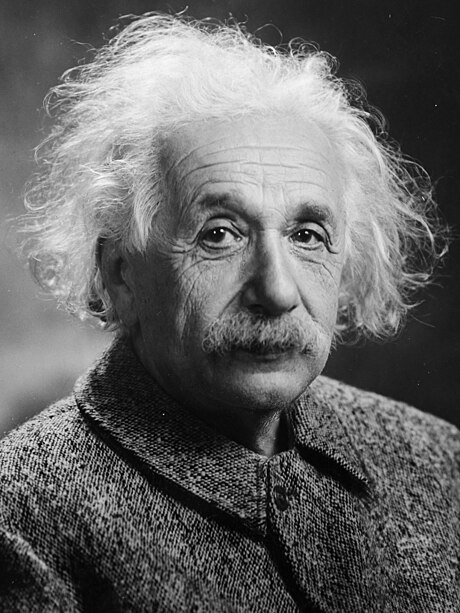
“Nearly everyone has heard of Einstein—he is the most recognizable scientist of all time, he was chosen as ‘Person of the Century’ by Time magazine and, if nothing else, his quotations seem to be all over the Internet (some of which are not actually by him, but that’s another story). They also may have heard that he came up with some of his revolutionary ideas, such as the special theory of relativity, while working as a lowly patent clerk. And they vaguely know that there’s some esoteric and mind-bending stuff involved. But they may not realize that the real story of his early troubles and triumphs is more interesting (and relevant) than the myths, and that it is well within their abilities to bend their minds a little and actually understand the basic concepts and implications of relativity.” – Dr. Larry Randles Lagerstrom
Here is the full Q&A with Larry:
Q: Tell us a little about yourself.
A: I have taken a circuitous academic path to where I am today at Stanford. As an undergraduate I focused on physics and mathematics, with a few forays into English literature. I then went to the University of California at Berkeley to pursue a Ph.D. in physics. Along the way, however, I discovered that I was most interested in the history and philosophy of science, so I ended up with an M.A. in physics and a Ph.D. in history. I then made another detour and taught computer science for a number of years, first at Berkeley and then at the University of California at Davis. Coming to Stanford four years ago as an Academic Director has allowed me to return to some of my interests in the history of science. The energy and vibrancy of a place like Stanford is incredible, for all the obvious reasons, but especially because of its emphasis on the importance of a liberal education that crosses disciplinary boundaries.
Q: What attracted you to the history of science?
A: Besides the opportunity to retrace the paths of great thinkers like Galileo, Descartes, Newton, Darwin, and Einstein, I am particularly fascinated by the period of physics from the second half of the nineteenth century into the early twentieth century, because it’s a time of grand unifying theories (thermodynamics and electromagnetism), startling discoveries (X rays, radioactivity, and the electron), the rise of physics-based industries (the telegraph, electric lighting and power, and radio), and the transition from classical to modern physics (relativity and quantum mechanics).
Q: What course are you teaching?
A: I am teaching “Understanding Einstein: The Special Theory of Relativity.”
Q: Why should students be interested in this course?
A: Nearly everyone has heard of Einstein—he is the most recognizable scientist of all time, he was chosen as “Person of the Century” by Time magazine and, if nothing else, his quotations seem to be all over the Internet (some of which are not actually by him, but that’s another story). They also may have heard that he came up with some of his revolutionary ideas, such as the special theory of relativity, while working as a lowly patent clerk. And they vaguely know that there’s some esoteric and mind-bending stuff involved. But they may not realize that the real story of his early troubles and triumphs is more interesting (and relevant) than the myths, and that it is well within their abilities to bend their minds a little and actually understand the basic concepts and implications of relativity.
Q: Will students need to do a lot of math in the course?
A: The good news is that the level of math required to gain a deeper understanding of the special theory of relativity is basic algebra. The even better news is that students will have a choice as to how much math they want to do. I have designed the course so that students can choose to follow a more quantitative approach or a more qualitative approach to the material. Those who choose the more quantitative approach will be doing some math (at the level of algebra), while those who choose the more qualitative approach will have to do little or no math in their assignments (though they need to be willing to try to follow along with the math in some of the video clips). Instead, one of the main assignments for the qualitative approach will be the completion of a creative project. In addition, a brief math review will be provided for those whose algebra skills are rusty.
Q: Can you tell us more about the creative project?
A: I hope that the opportunity to do a creative project on the young Einstein and/or the special theory of relativity will allow students to engage with the material in a way that’s different from what is usually done. The project might consist of a video, musical piece, work of art, poem, or animation, and the approach may be instructional, humorous, serious, or dramatic, or some combination thereof. So although I will have a few general guidelines within which students must work, there will be a lot of room for creativity.
Q: What is the one thing that you hope students will take away from your course?
A: Einstein talked about how the quest for understanding is an enriching and even an ennobling experience, and I hope that students will find the course to be exactly that kind of experience for them.
See Larry’s Profile here.