
Coursera
  • Find a Course
  • Sign Up
Coursera Blog
  • Degrees
  • For Business
  • For Educators
  • Product News
  • Stories

Coursera expands AI-powered translations to 17 popular languages

December 5, 2023

Share
Share on Facebook Share
Share on TwitterTweet
Share on LinkedIn Share
Send email Mail

Consumer and enterprise learners can now access 4,000 courses and 55+ Professional Certificates in languages including French, Greek, and Thai

By Marni Baker Stein, Chief Content Officer, Coursera

In a world that is rapidly globalizing, language barriers continue to pose a significant challenge for learners looking to develop new skills to advance their careers and enter new fields. To help address this gap, we are pleased to announce that we are rapidly expanding our AI-powered translation efforts, helping more learners around the world access education in the languages they are most comfortable with. 

All learners can now access 4,000+ courses, 600+ Specializations, and 55+ Professional Certificates from partners like IBM, Meta*, and Microsoft in up to 17 languages, up from seven languages announced for enterprise learners just two months ago. The translations cover the full in-course experience: lecture video subtitles, course readings, quizzes, assessments, assignments, instructions, discussion prompts, course descriptions, and syllabi.
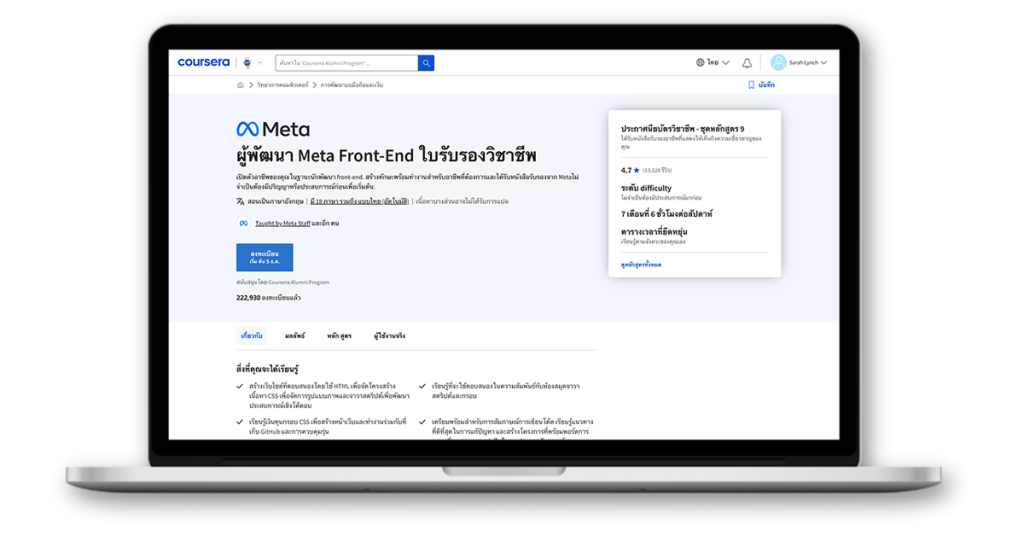
Today, learners can access content in the following languages:

  • Arabic (currently available for enterprise learners only)
  • Chinese – Simplified (NEW!)
  • Dutch (NEW!)
  • French
  • German
  • Greek (NEW!)
  • Indonesian
  • Italian (NEW!)
  • Kazakh (NEW!)
  • Polish (NEW!)
  • Portuguese – Brazil 
  • Russian (NEW!)
  • Spanish
  • Swedish (NEW!)
  • Thai 
  • Turkish (NEW!)
  • Ukrainian (NEW!)

More than 450,000 learners have already accessed translations in the initial seven languages and over 58 million registered learners on Coursera are based in countries with one of these 17 languages as their official language. In each course, learners can toggle between their local language or use subtitles for English courses to advance their English language proficiency. 

This expansion also spans 55+ Professional Certificates – including 19 certificates from IBM, 8 from Meta, and 6 from Microsoft – to help learners across the globe break into or advance in high-demand careers.

“To continue empowering individuals and reduce language barriers, IBM Professional Certificates on Coursera will now be offered in several languages,” said Nicole Borowski, IBM Learning communications lead. “More people can take advantage of this expanded access to grow and transform their skills.”

“We are thrilled to introduce our Professional Certificates in a variety of new languages,” said Amy Brooks, Director of Business Education at Meta. “As an organization that thrives on connection and breaking down barriers, we’re looking forward to helping even more learners of all backgrounds develop the skills needed to participate in the digital economy.”

To access translated courses, Specializations, and Professional Certificates, head to coursera.org and filter by language in the search menu.

* Professional Certificates from Meta are currently available in Arabic, French, German, Greek, Indonesian, Portuguese (Brazil), and Thai. All 17 languages will be available in 2024. 

Share
Share on Facebook Share
Share on TwitterTweet
Share on LinkedIn Share
Send email Mail

Keep reading

  • 2026’s Fastest-Growing Skills and Top Learning Trends From 2025
  • Empowering leaders to build a skills-first future
  • Celebrating 10 million GenAI enrollments on AI Appreciation Day
  • New on Coursera, Google Agile Essentials course helps professionals deliver projects and results faster
  • 2024’s Rising Content and Fastest Growing Skills for 2025
  • Wharton Online and OpenAI launch a new course on Coursera, “AI in Education: Leveraging ChatGPT for Teaching”
  • Announcing 10 entry-level Professional Certificates from our biggest partners as digital transformation reshapes the labor market
  • Google launches Prompting Essentials course as demand for AI skills continues to grow
  • Coursera celebrates AI Appreciation Day with new GenAI courses, Professional Certificate enhancements, and GenAI Academy for Teams
  • Presenting the 2024 Coursera Global Skills Report
  • Coursera launches a new suite of Academic Integrity features to help universities verify learning in an age of AI-assisted cheating
  • Announcing four new entry-level certificates and Universal Skills scholarship program from Microsoft to help learners land in-demand jobs
  • Clemson University partners with Coursera to launch first degree in South Carolina with no application*
  • Google launches AI Essentials course on Coursera to help learners boost their productivity and thrive
  • Twelve Google and IBM Professional Certificates on Coursera receive ECTS credit recommendations
  • Coursera Launches Generative AI Academy to Improve Executive and Foundational Literacy 
  • Introducing “Navigating Generative AI: A CEO Playbook” 
  • Nevada DETR and Coursera announce statewide program providing free job training to thousands of people 
  • University of Texas System and Coursera Launch the Most Comprehensive Industry Micro-Credential Program Offered by a U.S. University System
  • Coursera announces new AI content and innovations to help HR and learning leaders drive organizational agility amid relentless disruption
  • New Coursera survey shows high demand for industry micro-credentials from students and employers in tight labor market
  • Coursera and Google partner with the University of Texas System to provide critical job skills to students across eight campuses  
  • What the world learned on Coursera in 2022
  • Coursera partners with state university and workforce systems to prepare Louisiana’s workforce for jobs of the future 
  • Connecting Google certificates and university Specializations to help learners prepare for in-demand career fields
  • Coursera partners with IFC and the European Commission to publish global study on women and online learning in emerging markets 
  • Coursera Launches Clips to Accelerate Skills Development through Short Videos and Lessons
  • Preparing learners around the world for in-demand jobs with Career Academy and new entry-level certificates from Meta and IBM
  • Coursera and Milken Center for Advancing the American Dream launch free nationwide skills training initiative for underserved Americans 
  • Coursera’s response to the humanitarian crisis in Ukraine
  • Coursera announces 3 new job-relevant degrees from leading universities
  • Coursera doubles down on Middle East with new leadership, content and platform features
  • Coursera Women and Skills Report indicates a narrowing gender gap in online learning
  • Coursera accelerates India growth plans
  • Announcing the Coursera Global Skills Report 2021
  • Turning Entrepreneurial Ambition into Global Impact
  • Introducing Coursera’s Job Skills Report 2026: The most critical skills the world’s learners need this year
  • Cleveland Clinic joins Coursera to teach the latest healthcare skills at a global scale
Coursera

Coursera was launched in 2012 by Andrew Ng and Daphne Koller, with a mission to provide universal access to world-class learning. It is one of the largest online learning platforms in the world, with millions of registered learners and thousands of institutional customers.

© 2026 Coursera Inc. All rights reserved.

Download on the App Store Get it on Google Play

B Corp
  • Coursera
  • About
  • What We Offer
  • Leadership
  • Careers
  • Catalog
  • Professional Certificates
  • MasterTrack™ Certificates
  • Degrees
  • For Enterprise
  • For Campus
  • For Government
  • Become a Partner
  • Coronavirus Response
  • Community
  • Learners
  • Partners
  • Developers
  • Beta Testers
  • Translators
  • Tech Blog
  • Teaching Center
  • Connect
  • Blog
  • Facebook
  • LinkedIn
  • Twitter
  • Instagram
  • More
  • Press
  • Investors
  • Terms
  • Privacy
  • Help
  • Accessibility
  • Contact
  • Articles
  • Directory
  • Affiliates